


ITR Filing for NRIs in Delhi 2026 – Professional NRI income tax return filing services
Ask Question?

Fill up form below, our team will get back soon

ITR Filing for NRIs in Delhi 2026 | Documents, Deadlines & Process

However, for Non-Resident Indians (NRIs) having any source of income, investments or properties in Delhi, ITR Filing or Income Tax Return Filing is no longer an annual responsibility now. This is the proof to determine your eligibility for any tax refunds, claiming any loss carry forwards, DTAA benefits, and even any scrutiny letters from the Income tax department. As compared to other years, in 2026, ITR filing of NRIs in Delhi is becoming increasingly data-driven and is precisely associated with your bank TDS reports, remittance records and AIS/TIS reconciliation.

In this article, we provide you all the necessary information of NRI ITR filing in one single page and Non-Resident Indians having income, investments or business in Delhi or the entire NCR region can access all the details needed here.

This article covers everything regarding ITR filing of NRIs and will definitely help those people who have received income like rent, capital gains, interest income or business income from India residing abroad through their Delhi NCR-linked assets.


What Is an ITR for NRIs?

NRIs’ ITR is the tax return form filled by an Non-Resident Indian to declare the income earned or accrued in India for the financial year from sources including immovable property, capital gain, interest on money or any other source and the tax liability generated as a consequence thereof before the Income Tax Department. Through ITR, NRIs can declare the India-sourced income and benefit from the Double Taxation Avoidance Agreement (DTAA). It becomes necessary for NRIs to file their ITR each year after exceeding the specified threshold income earned in India, irrespective of their status outside the country.

The Four Core ITR Filing Services Every NRI Needs

ITR Filing for Rental & Property Income

Report rental income on property owned in the region of Delhi NCR, including relevant deductions and TDS calculation.

ITR Filing for Capital Gains on Indian Assets

Reporting gains from the sale of real estate, shares or units in a mutual fund based in India.

ITR Filing for Interest & Investment Income

Reporting interest from NRE/NRO accounts, fixed deposits, and other investments, along with applicable TDS credits.


ITR Filing With DTAA Benefit Claims

Seeking benefit of double taxation agreement (DTAA) between India and country of residence regarding relief from double taxation.

Why ITR Filing for NRIs Matters in 2026

Some of the changes which have impacted ITR filing of NRI in 2026 include the following:

Pre-filled data to be used for filing is going to be calculated based on the TDS amount withheld by the bank and the tenants (Form 26 AS/AIS), foreign remittances, and also the property transactions; this way, there can be a system detection of inconsistency between data submitted.


Residential status identification has been closely monitored for its influence on taxable income; this way, there is the need to maintain consistent travel and residence records.


Data filing through ITR is going to be cross-checked with the certificates for bank interest income, property transaction sales deed, and gains made; this way even slightest discrepancy will cause receiving the tax notice letter within few weeks.

For the NRIs whose income is derived from rentals, capital gains on property, and interest earned through various accounts in India, ITR filling using the right form should be done in order to claim eligible DTAA benefits and deductions.

Benefits of Staying ITR Compliant as an NRI

data

No penalties for nonpayment or interest that may make cross-border tax payments difficult.

planning

Excess TDS refunds for your rental, property sale and interest income deductions in India.

streamlined-connectivity

Repatriation of the money becomes easier because an ITR filed makes the process of sending money abroad easier.

money

Capacity to transfer losses that may arise due to capital asset sales in profitable periods.

Trusted by 100+ Companies

Step-by-Step: The ITR Filing Journey for an NRI

Step 1: Collect Your Documents

Your documents must contain the following: PAN, passport photocopy, NRE/NRO account statement, property papers (if any), TDS certificates, and details regarding the income from India.

Step 2: Choose the Right ITR Form

Your choice of form will be determined by your means of earning income such as rent, capital gain, business income or a combination of these sources of income.

Step 3: Reconcile with TDS and AIS/Form 26AS

Before submission, ensure that there is no mismatch between your income and the TDS declared with Form 26AS and AIS.

Step 4: File and Verify

Submit your return online, claim applicable DTAA relief and deductions, and complete e-verification within the prescribed window — an unverified return is treated as not filed.

Common Mistakes to Avoid

Filing under the wrong ITR form

Use of the wrong format in your India-sourced income forms may make the tax return invalid.

Not determining residential status correctly

Incorrect classification of residence may have an adverse impact on taxation of either world income or Indian income.

Missing the filing deadline

Interest penalties are incurred by late filing, and consistent lateness can lead to investigation.

Forgetting to e-verify after submission

An unverified ITR is treated as not filed at all, even if you submitted it on time.

ITR Filing Deadline for NRIs

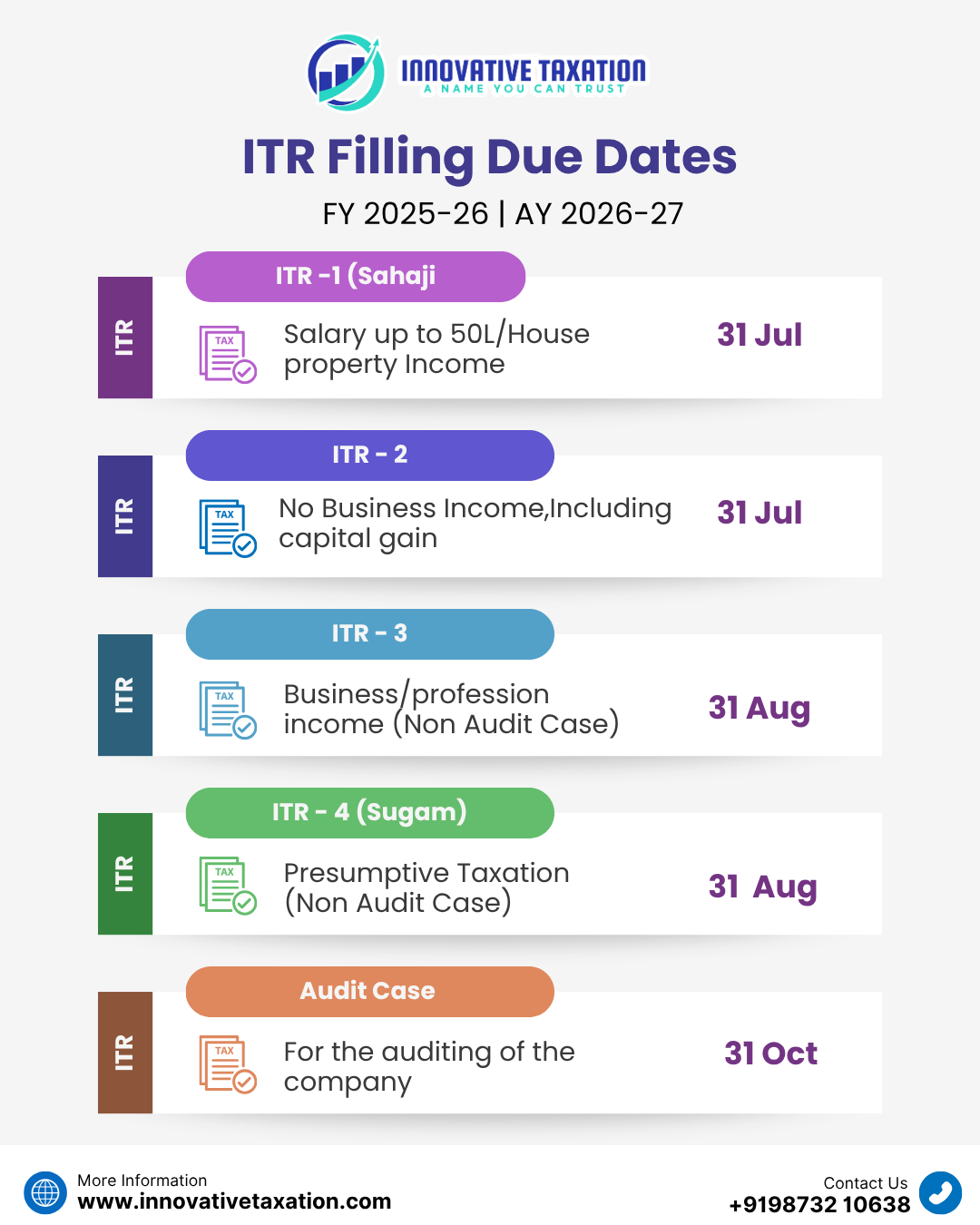
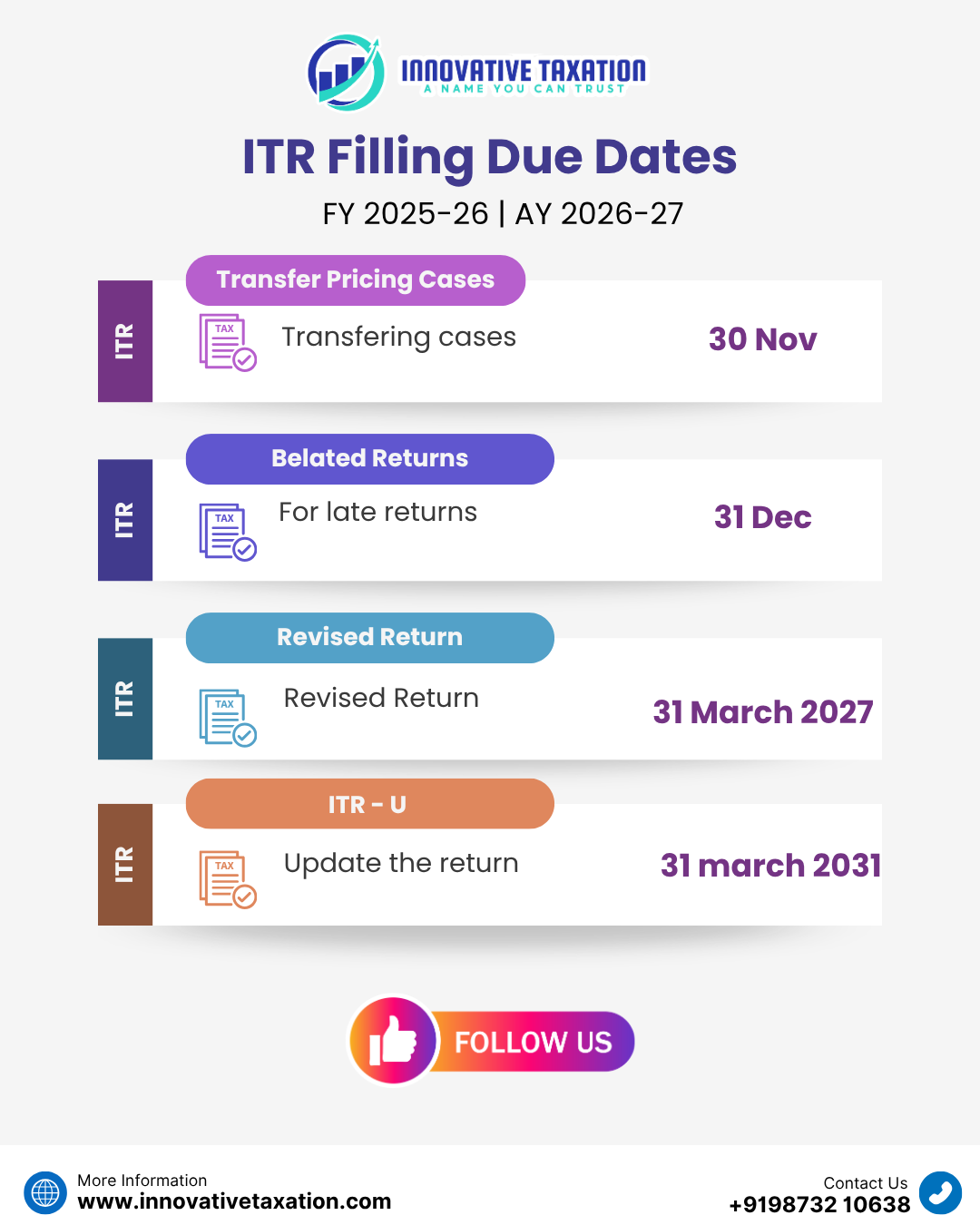
NRIs who are not subjected to tax audit must ensure that they have filed their ITR on or before 31st July, whereas, NRIs who generate business income subjected to tax audit must file it on or before 30th September. Delay in submission will entail certain fines and interest rates imposed under Section 234F of the Act.


ITR Filing Services Comparison Table

ServiceWhen You Need ItTypical Turnaround
ITR Filing for Rental & Property IncomeEvery financial year, before 31 July3-4 working days
ITR Filing for Capital Gains on Indian AssetsSale of property, stocks, or mutual funds in India4-6 working days
ITR Filing for Interest & Investment IncomeInterest from NRE/NRO accounts and deposits2-3 working days
ITR Filing With DTAA Benefit ClaimsAvoiding double taxation on India-sourced income5-7 working days
ITR(U) / Updated ReturnCorrecting or updating a previously filed/missed return3-5 working days


Let Us Help You!!

Frequently Asked Questions

Who needs to file an ITR as an NRI?

An NRI is required to file ITR yearly once the amount of income received from the source in India surpasses the stated limit.

The Double Taxation Avoidance Agreement (DTAA) prevents NRIs from being taxed twice on the same income in both India and their country of residence, allowing them to claim relief or credit.

Of course it is, mandatory that too for NRIs – it’s safe, overseas-accessible, and reduces the processing time.

The NRI will be liable for late payment penalty of Section 234F, along with the interest payable on tax arrears and loss from carry-forward.

Theoretically speaking, filing returns yourself is possible if your income is easy, single, and you don’t have any property deals, DTAA claim, etc.

Ask Question?

Fill up form below, our team will get back soon

What Our Clients Says

4.9 rating across 100+ Google Reviews

Get Latest Updates On GST

From Govt. New Rule to the blogs on saving taxes

Scroll to Top