

ITR Filing for Businesses in Delhi 2026 – Business Tax Return Filing and Compliance
Ask Question?

Fill up form below, our team will get back soon

ITR Filing for Businesses in Delhi 2026 | Documents, Deadlines & Process

For proprietors, partnership firms, LLPs or private limited companies running their business in Delhi, Income Tax Return Filing or ITR Filing cannot be considered to be a yearly obligation anymore. It serves as a document that decides whether your business will get any refund claims, working capital loans, loss carry forward or any scrutiny letters from the authorities. In 2026, filing business ITR in Delhi has become more data driven and precisely linked to tax audit, GST reconciliation and TDS data as compared to previous years.

In this article, we bring you all the information related to business ITR filing in one place and here, proprietors, partnership firms, LLPs and private limited companies running in Delhi or entire NCR region can find out all they require.

This article is everything about ITR filling of individual taxpayers and would prove very helpful for those individuals who have been working either in salary employment or in professional freelancing work or even senior citizen in Delhi NCR and even for NRIs and those earning through rental and capital gain.

This article will tell you when you need to cancel your GST registration, how the procedure works and what final compliance actions you need to take even after the GSTIN is gone.


What Is an ITR for Businesses?

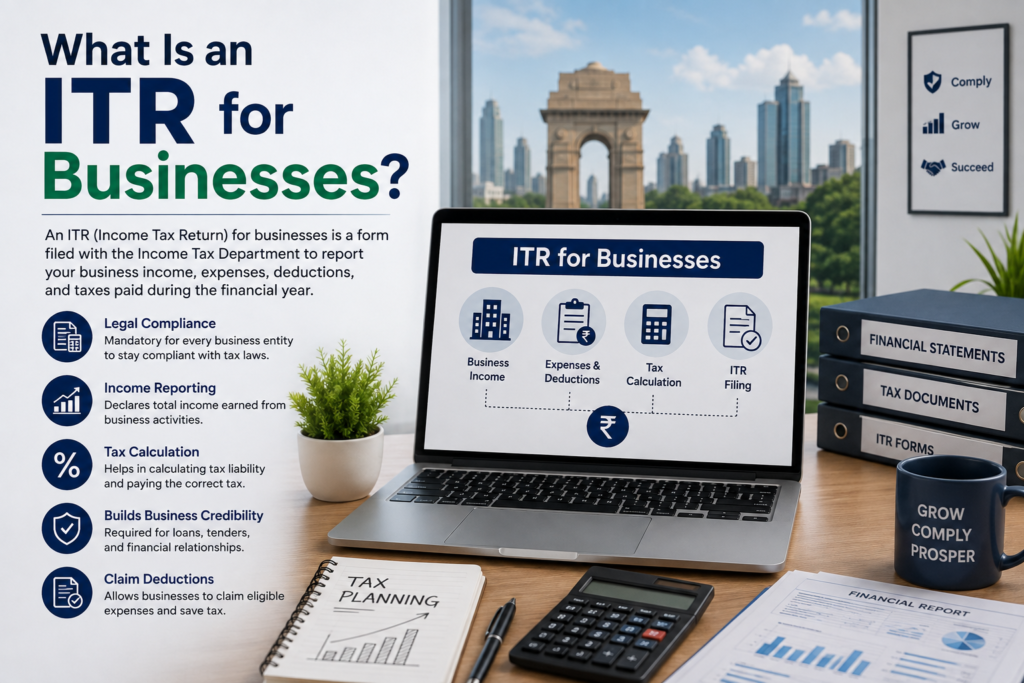
A business’s Income Tax Return (ITR) is the document by which a proprietary concern, firm, LLP, or company provides information about income that has been generated during a financial year from business, capital gains, or any other source and about tax liability arising out of this income to the Income Tax Department. ITR enables the business to report their income precisely and to deduct any amount that may be allowable under the law. Businesses are mandated to file their ITR every year even if the income generated is zero or in case of loss making years.

What Is an ITR for Businesses – Income Tax Return Filing, Tax Calculation and Compliance

The Four Core ITR Filing Services Every Business Needs

ITR Filing for Proprietorship Firms

Income reporting by businesses via individual PANs of proprietors, including presumptive taxation schemes and expenses.

ITR Filing for Partnership Firms & LLPs

Filing with the PAN of the firm, stating partner compensation and interest income, and reconciling the accounts with the return.

ITR Filing for Private Limited Companies

Mandatory filing whether in profit or loss, including compliance with tax audits, MAT calculation, and ROC disclosures.

ITR Filing for Businesses Requiring Tax Audit

Turnover based audit’s applicability in terms of 44AB, submission of the audit report, and correct reconciliations before the due date.

Why ITR Filing for Businesses Matters in 2026

Some of the changes that have influenced business

filing in 2018 include

• The pre-filled data in filing will be based on the returns filed for GST, the TDS returns and AIS/TIS data; this way, the system will automatically pick up a mismatch in the figures provided for GST and the ITR returns.


• There is close monitoring for tax audit threshold levels and presumptive income threshold levels, hence the need for tracking the income generated all throughout.


• There is a cross-matching of information filed in ITR against information filed in GST and TDS; this way even slight inconsistencies will result in a tax notice after one week.

For companies that generate income from other sources like business, capital gain from investments or rent from the commercial property, proper filing of ITR forms is necessary. This helps in reconciling income from all sources.


Benefits of Staying ITR Compliant as a Business

data

No late fees, interest, or penalty notices that eat into your business's cash flow.

planning

Faster loan and credit approvals, as banks and NBFCs assess business ITR filing history before sanctioning working capital or term loans.

streamlined-connectivity

Smoother tender and vendor onboarding, since ITRs are routinely required for business credibility checks.

money

Ability to carry forward business losses and unabsorbed depreciation to future profitable years.


Trusted by 100+ Companies

Step-by-Step: The ITR Filing Journey for a Business

Step 1: Collect Your Documents

Your documents should include the following: PAN, proof of company registration, P&L statement & balance sheet, bank statements, GST reports and TDS certificate, income and expense details.

Step 2: Choose the Right ITR Form

The correct form depends on the business structure — proprietorship, partnership/LLP, or company — and whether presumptive taxation or regular books of accounts apply.

Step 3: Reconcile with GST, TDS, and AIS/Form 26AS

Before filing, cross-check your reported turnover and income against your GST returns, TDS credits, and AIS to avoid mismatches that delay processing.

Step 4: File and Verify

Submit the return online, complete the tax audit (if applicable) before the extended deadline, and finish e-verification within the prescribed window — an unverified return is treated as not filed.

Common Mistakes to Avoid

Filing under the wrong ITR form

Using a form that doesn't match your business structure can render the return defective.

Not reconciling turnover with GST returns

Mismatches between GST-reported turnover and ITR income are now caught almost immediately.

Missing the tax audit or filing deadline

Late filing brings interest and penalty charges, and missing the audit deadline can disallow certain deductions.

Forgetting to e-verify after submission

An unverified ITR is treated as not filed at all, even if the audit and return were completed on time.

ITR Filing Deadline for Businesses

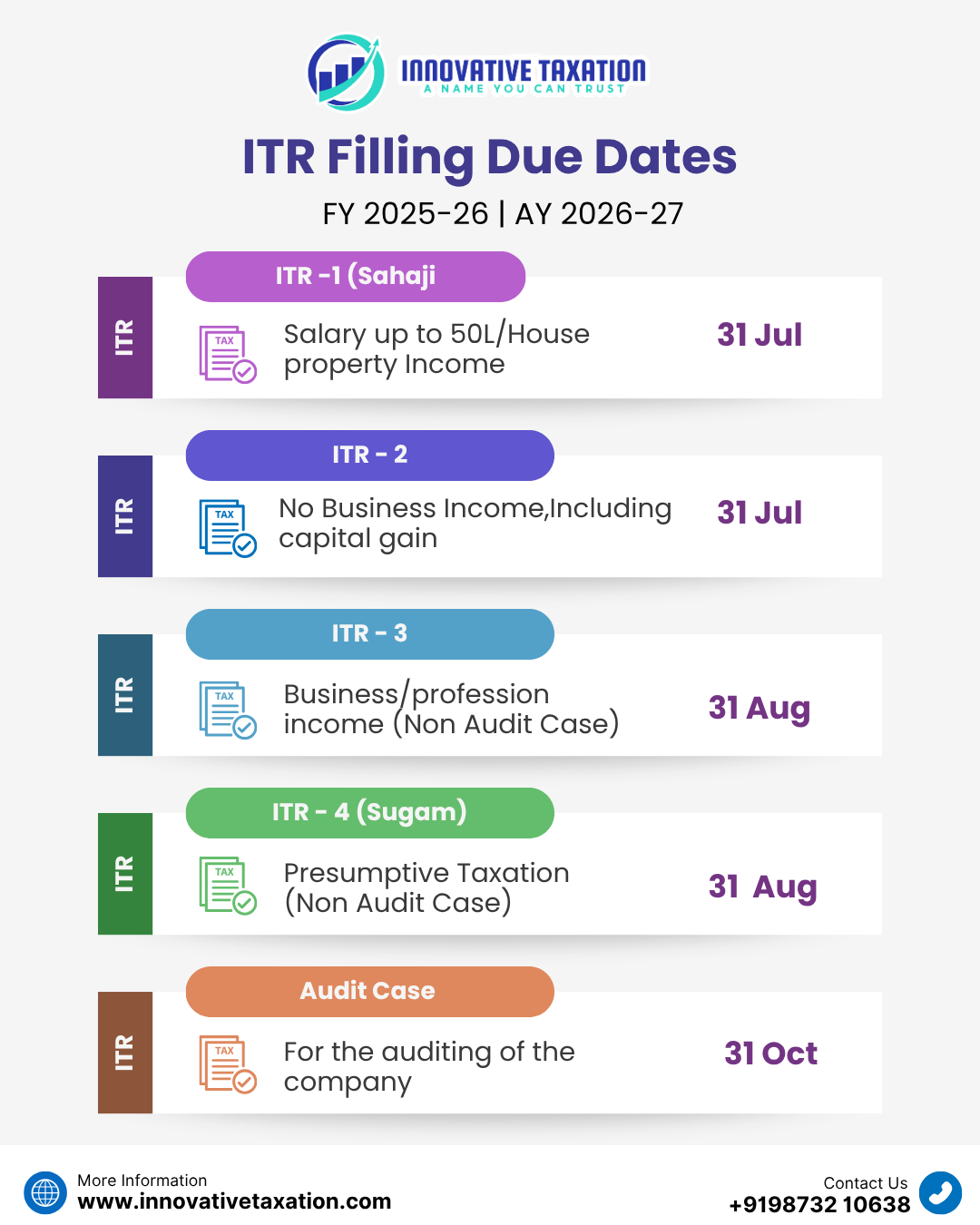
Companies that do not need to go through a tax audit should submit their ITR by 31st July, whereas companies which are needed to go through tax audits under Section 44AB of Income Tax have a deadline until 30th September (and even more as per extension by the government). Failure to file on time will subject them to the late filing charges of Section 234F.


ITR Filing Services Comparison Table

Service 

When You Need It 

Typical Turnaround 

ITR Filing for Proprietorship Firms 

Every financial year, before 31 July 

3-4 working days 

ITR Filing for Partnership Firms/LLPs 

Every financial year, regardless of profit/loss 

4-6 working days 

ITR Filing for Private Limited Companies 

Every financial year, mandatory even in loss 

5-7 working days 

ITR Filing with Tax Audit 

Turnover exceeds prescribed audit threshold 

7-10 working days 

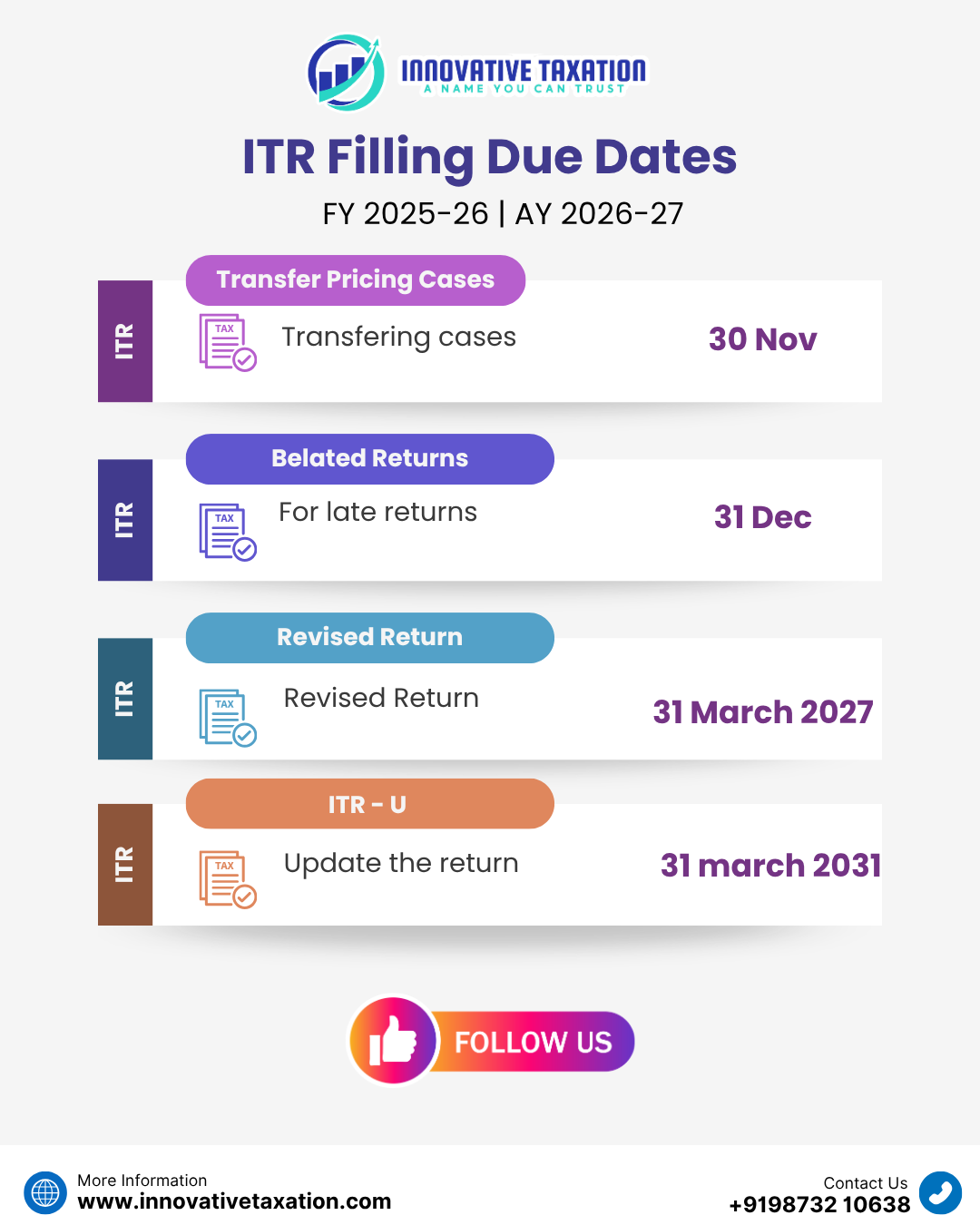
ITR(U) / Updated Return 

Correcting or updating a previously filed/missed return 

3-5 working days 

Let Us Help You!!

Frequently Asked Questions

Who needs to file a business ITR?

Every business entity — proprietorships, partnership firms, LLPs, and companies — must file an ITR annually, regardless of profit, loss, or nil income.

No, tax audit under Section 44AB applies only when turnover or income crosses prescribed thresholds, or in certain cases involving presumptive taxation.

Yes, e-filing is mandatory for all business entities — it’s secure, trackable, and reduces processing time.

The business may face a late filing penalty under Section 234F, interest on unpaid tax, and could lose the ability to carry forward certain losses.

Technically yes for simple structures, but with tax audit requirements, GST reconciliation, and multiple income heads, professional guidance helps avoid errors, missed deductions, and notices.

Ask Question?

Fill up form below, our team will get back soon

What Our Clients Says

4.9 rating across 100+ Google Reviews

Get Latest Updates On GST

From Govt. New Rule to the blogs on saving taxes

Scroll to Top