

ITR filing for rental income – tax filing services for rental property income, deductions, TDS, and compliance in India
Ask Question?

Fill up form below, our team will get back soon

ITR Filing for Rental Income in Delhi 2026 | Documents, Deadlines & Process

Filing Income Tax Return or ITR for property owners receiving rent from residential, commercial or multi-property in Delhi has ceased to be an annual duty. For a property owner to receive any refunds in case of TDS deduction by tenant, benefits of home loan interest deduction, loss carry forward or scrutiny from the authority, it has to act as a proof document for it. For ITR filing for rental income in Delhi for 2026, it has become more data-oriented and closely related to tenant TDS, property registration data, and AIS/TIS reconciliation than ever before.

In this article, we provide you with all the information regarding ITR filing for your rental income in one place, where you can find all the details required if you are individual landlord, co-owners or multi-property owners in Delhi or entire NCR region.

This article is solely dedicated to ITR filing for rental income and will prove to be a great help for those individuals earning rent from residential flats, commercial premises or joint property in Delhi NCR.


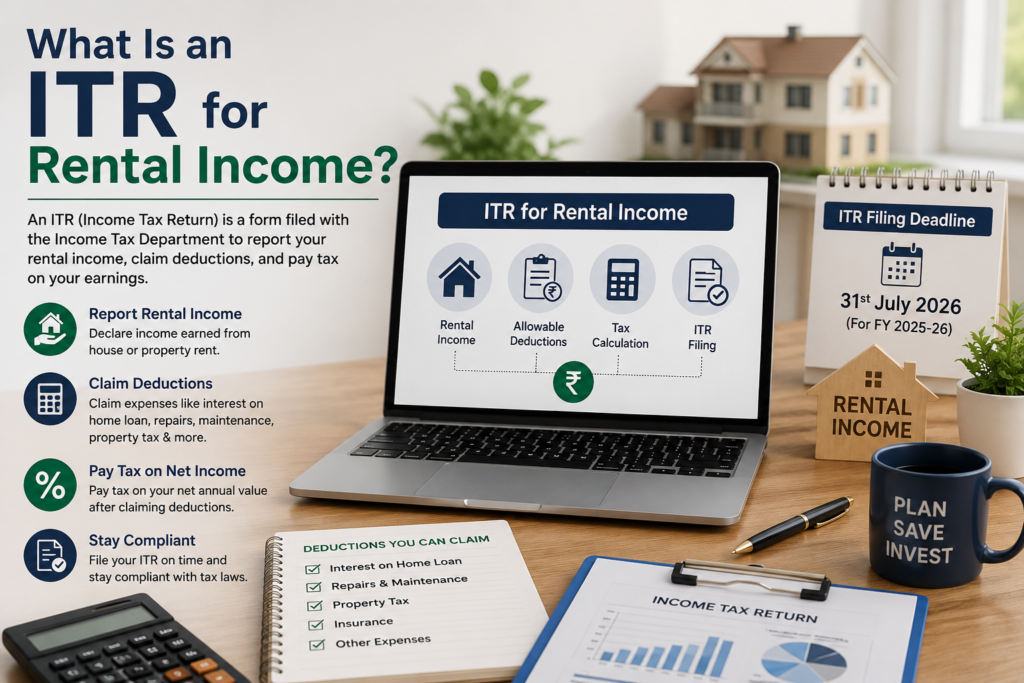
What Is an ITR for Rental Income?

ITR in case of rental income means that the document in which the information regarding the income earned through the process of renting out one’s property during a fiscal year is disclosed to the Income Tax Department along with the amount of tax payable due to earning this income. The purpose of an ITR in the context of rental income allows people to disclose the income earned through the process of renting out one’s property under the head “Income from house property” and claim deductions that can be claimed as per the tax laws such as interest and other municipal taxes paid by individuals.

What Is an ITR for Rental Income? Rental Income Tax Filing, Deductions and Tax Calculation

The Four Core ITR Filing Services Every Landlord Needs

ITR Filing for Single Residential Property Rental

Inclusion of rental income from a single property together with normal deductions and city taxes.

ITR Filing for Multiple/Commercial Properties

Accurately consolidating income from rent on more than one piece of property into one return.

ITR Filing for Co-Owned Property

The reporting of income from rent on a proper basis in accordance with their shares of ownership.

ITR Filing With Home Loan Interest Deduction

Deduction to be claimed on the interest paid for home loan in respect of rented property.

Why ITR Filing for Rental Income Matters in 2026

Among the changes that affect rental income ITR submissions for 2026 are:

• TDS paid by the tenant as per Form 26AS/AIS, if any, and financial transactions associated with the property shall form the pre-filled data for filling, thereby enabling automatic detection of the inconsistency in the numbers submitted by the individual.

• There is close monitoring for tax audit threshold levels and presumptive income threshold levels, hence the need for tracking the income generated all throughout.

• There is always close scrutiny of deductions made from the city tax or interest from housing loans, which makes it necessary to keep payment records up-to-date all year round.

• ITR filed data is compared against tenant certificates for TDS, statements from banks and details about property; thus, even minor inconsistencies would ensure that a tax notice reaches you within weeks. This helps in reconciling income from all sources.

In cases where landlords own several properties, co-ownership or mixed property (both residential and business), the need to file the appropriate ITR form is important. This assists in the reconciliation of rentals as well as making allowable deductions.

Benefits of Staying ITR Compliant on Rental Income

data

No late fees, interest, or penalty notices that eat into your rental earnings.

planning

Faster loan approvals, as banks assess rental income declared in ITR while evaluating loan eligibility.

streamlined-connectivity

Claim excess TDS refunds deducted by tenants on rent payments.

money

Ability to carry forward house property losses to future years when rental income exceeds deductions.


Trusted by 100+ Companies

Step-by-Step: The ITR Filing Journey for Rental Income

Step 1: Collect Your Documents

Documents required would include the following: PAN Aadhaar Rent Agreement/Receipts Municipal Tax Payments Certificates Certificate of Interest on Home Loan (if any) Bank statements TDS certificates from tenant.

Step 2: Choose the Right ITR Form

This will be determined by whether one has any other source of income apart from house property or is deriving rental income only.

Step 3: Reconcile with TDS and AIS/Form 26AS

Before submission, make sure that your total reported rental income and total TDS amount deducted from your tenants' payments match Form 26AS and AIS.

Step 4: File and Verify

File your tax return electronically, deduct your eligible municipal and housing loan interests, and perform e-verification – failure to do so makes it equivalent to non-filing your return.

Common Mistakes to Avoid

Filing under the wrong ITR form

A form not corresponding to your means of earning money makes it an invalid tax return.

Not claiming municipal tax and home loan interest deductions

These deductions that can be made on house property income are usually overlooked, resulting in higher taxes.

Missing the filing deadline

Late submission attracts interest and penalty fees, while persistent delay invites closer investigation.

Forgetting to e-verify after submission

Even if an individual files their ITR in time, it will be considered to have never been filed.

ITR Filing Deadline for Rental Income

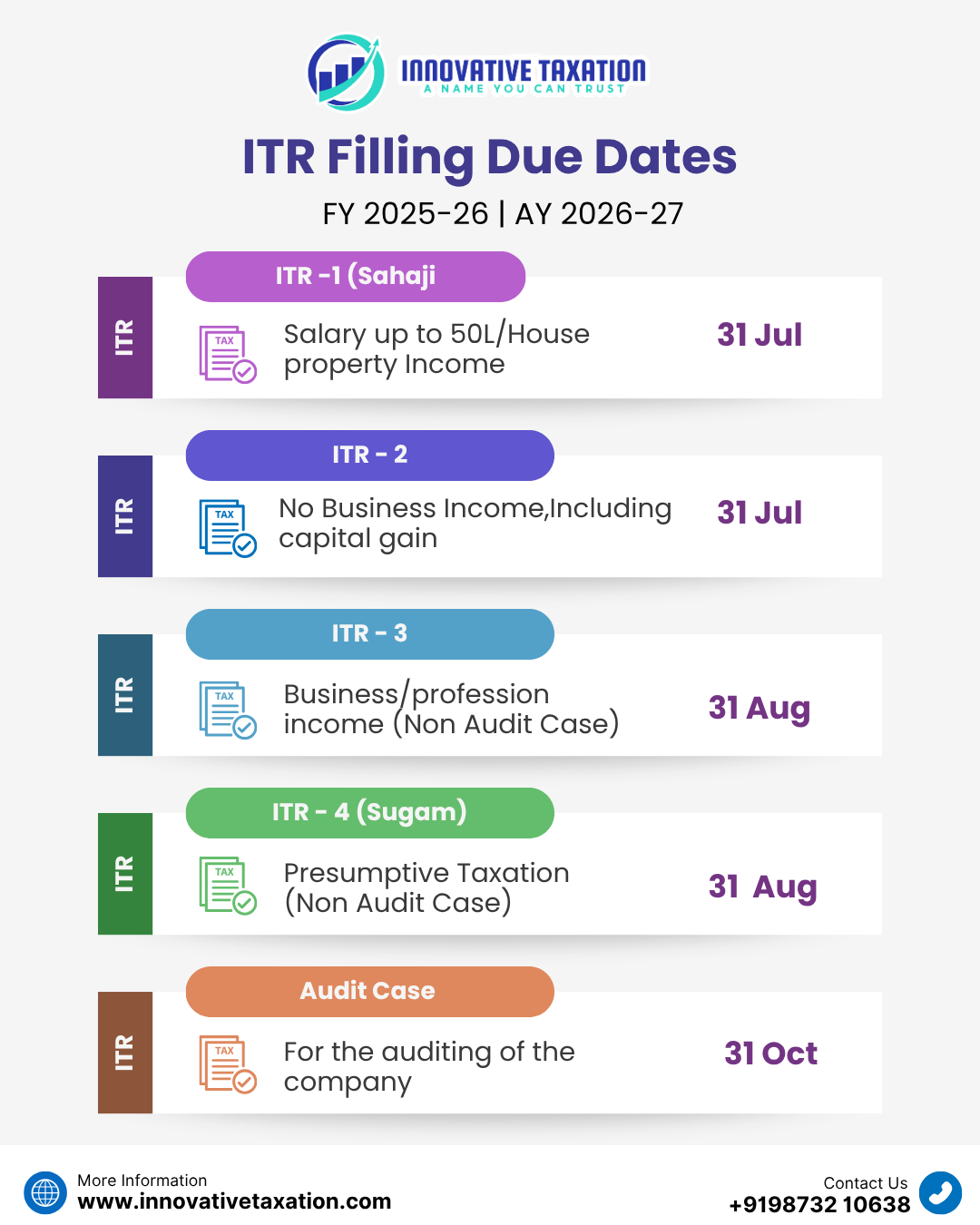
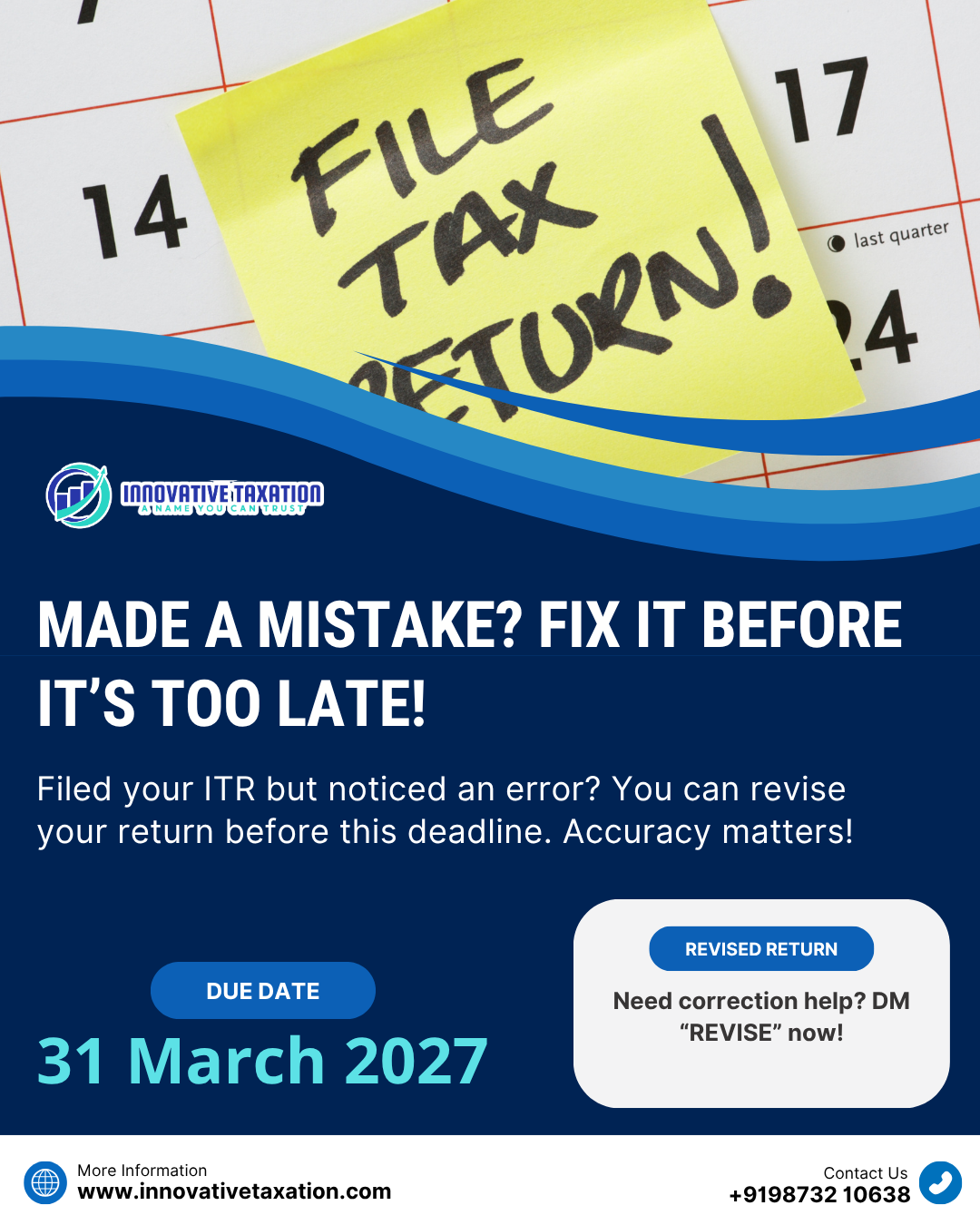
In cases where the individual account is not audited, such a taxpayer should file his/her return of income by 31st July. Failure to file on time may result in penalties for failure to comply with the law in accordance with Section 234F and in addition, one will incur interest charges.


ITR Filing Services Comparison Table

Service 

When You Need It 

Typical Turnaround 

ITR Filing for Single Residential Property

Every financial year, before 31 July

2-3 working days

ITR Filing for Multiple/Commercial Properties

Rental income from more than one property

4-6 working days

ITR Filing for Co-Owned Property

Home loan taken against rented property

3-4 working days

ITR Filing With Home Loan Interest Deduction

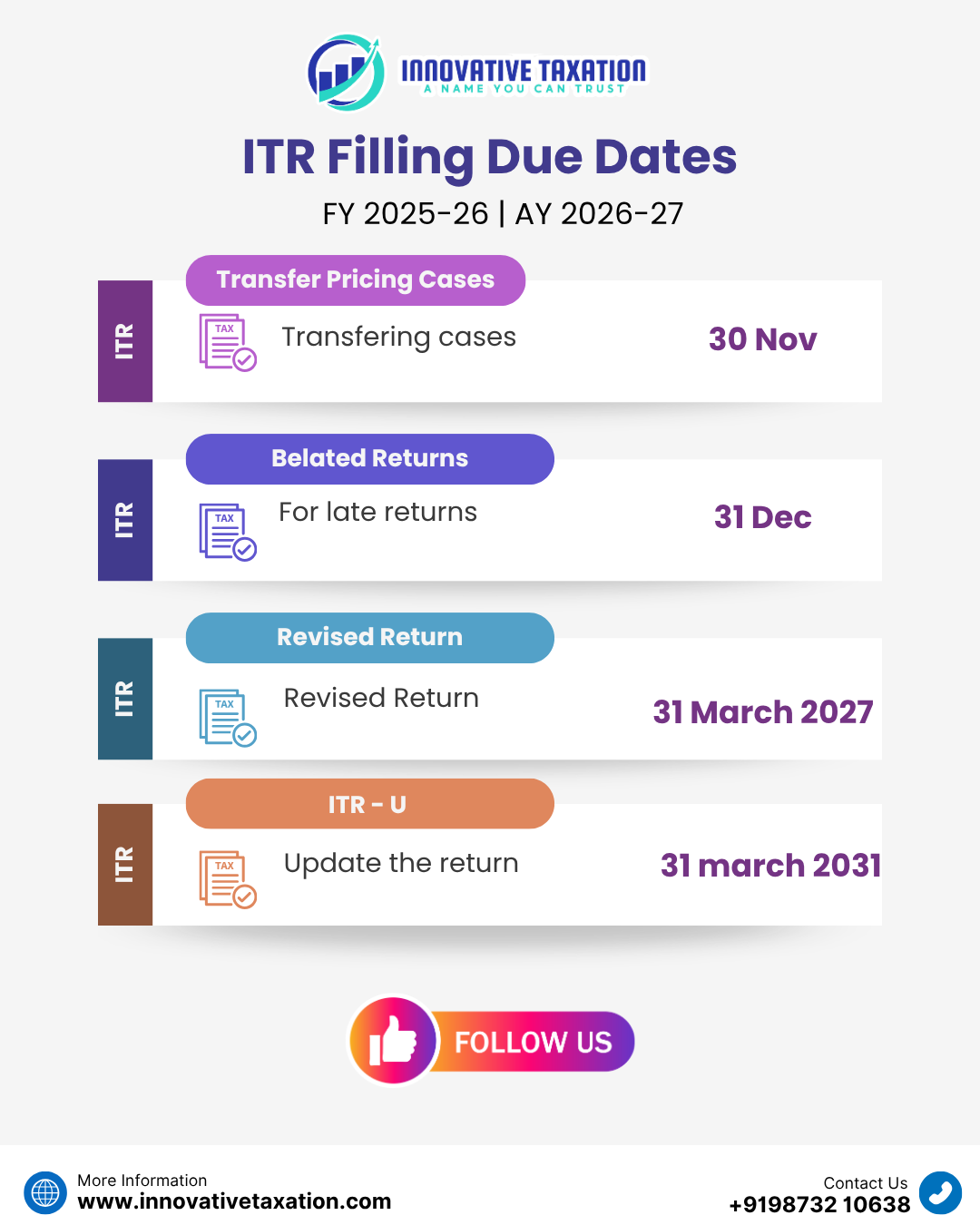
Correcting or updating a previously filed/missed return

3-4 working days

ITR(U) / Updated Return

Property jointly owned with defined ownership share

3-5 working days

Let Us Help You!!

Frequently Asked Questions

Who needs to file an ITR for rental income?

Anyone who owns property where the combined total income exceeds the threshold limit is required to file ITR every year.

Municipal taxes paid, standard deductions made for net annual value, and also the interest charged on loans taken to purchase your home can be claimed.

Yes, TDS deduction by the tenant doesn’t replace ITR filing — it’s a separate requirement, and filing is also how you claim any excess TDS as a refund.

Yes, filing of returns electronically is mandatory for the majority of the tax payers even those who have rental income.

Yes technically from the perspective of one rented property; however, from the perspective of numerous properties, co-ownerships, or property mortgages, seeking expert advice becomes critical.

Ask Question?

Fill up form below, our team will get back soon

What Our Clients Says

4.9 rating across 100+ Google Reviews

Get Latest Updates On GST

From Govt. New Rule to the blogs on saving taxes

Scroll to Top